
AI Dispatch Cuts Maintenance Delays
How a San Diego Property Firm Reduced Maintenance Delays with AI Dispatch
The Challenge
The client’s operations team was overwhelmed by maintenance coordination.
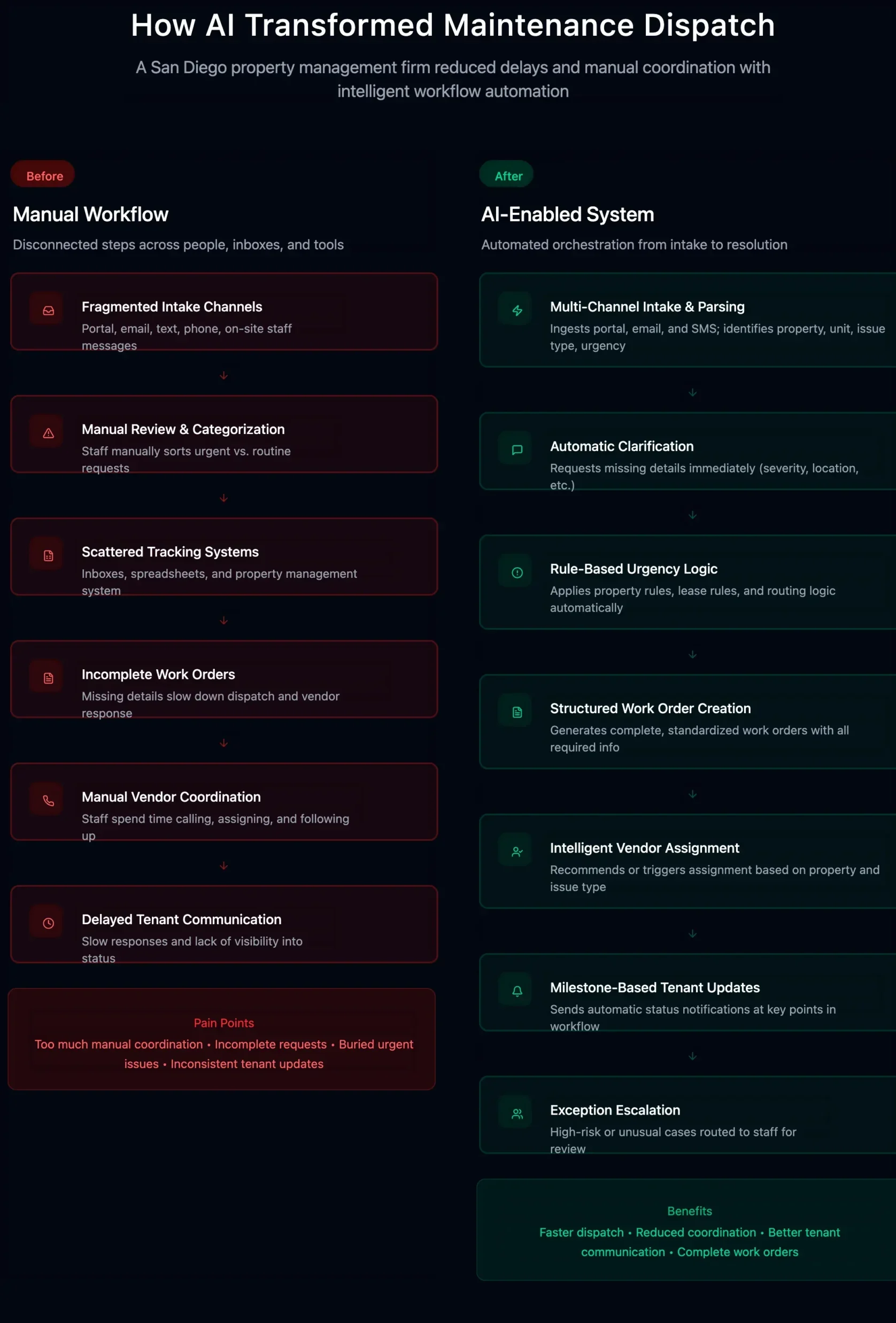
Requests were coming in through too many channels — tenant portal submissions, email, text messages, phone calls, and messages relayed by on-site staff. Every issue had to be reviewed manually, categorized, assigned to the right vendor, and tracked through completion.
The team was facing several problems at once:
maintenance requests were not always captured consistently
urgent issues were sometimes buried behind routine requests
staff spent too much time calling vendors, sending follow-ups, and updating tenants
work orders were often incomplete, which slowed dispatch
status updates lived across inboxes, spreadsheets, and the property management system
tenants were frustrated by slow responses and a lack of visibility
This is a common pain point in property management, where maintenance creates nonstop inbound volume and requires constant prioritization, vendor coordination, and tenant communication.
The Business Impact
Our Approach
We did not start by building software. We started by mapping the full maintenance workflow from intake to resolution. That included:
Interviews with property managers, coordinators, and operations leadership
Analysis of request intake across all channels
Review of how urgency was determined
Mapping vendor assignment logic and lease-specific handling rules
Identifying where work stalled, duplicated, or required repeated follow-up
Reviewing the systems involved in work order creation, vendor communication, and tenant updates
Key insight: What we found was that the real problem was not just “too many maintenance tickets.”
The real problem was that maintenance was being managed as a series of disconnected manual steps across people, inboxes, and tools. The same issue was being re-entered multiple times, clarifying questions were delayed, and a large amount of staff time was being spent on coordination rather than resolution. That aligns closely with the broader real estate pattern of repeated handoffs, duplicated information, and operational friction across systems.
The Solution
We designed and implemented an AI Maintenance Intake and Dispatch System that automated the workflow from request intake through vendor coordination and status communication.
The system was designed to:
Ingest requests from the tenant portal, email, and SMS
Identify the property, unit, issue type, and urgency
Ask follow-up questions automatically when key information was missing
Apply property rules, lease rules, and routing logic
Generate structured work orders
Recommend or trigger vendor assignment
Track execution status across the workflow
Send tenant-facing updates automatically at key milestones
Escalate unusual or high-risk cases to staff for review
What the System Actually Did
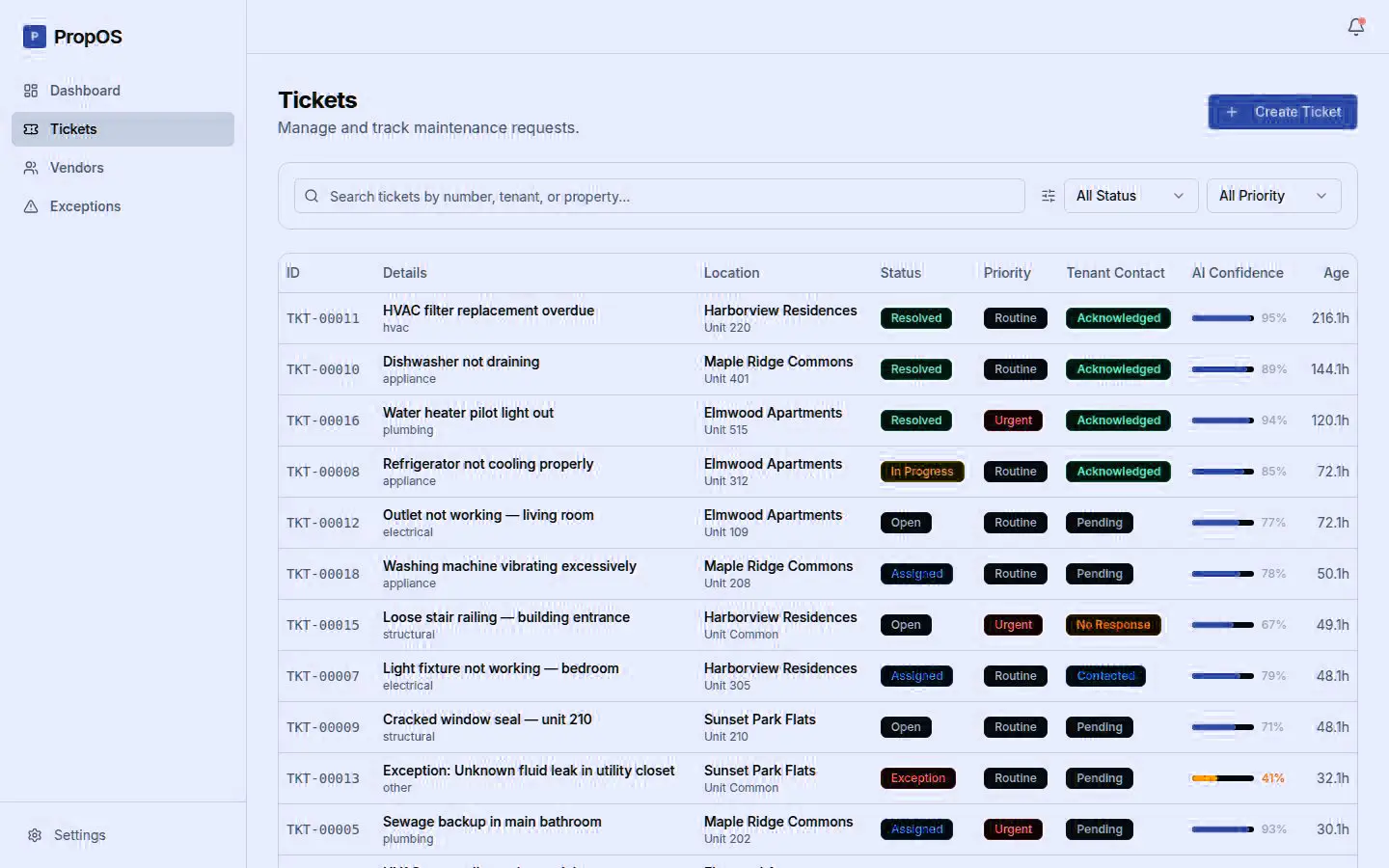
When a tenant submitted a maintenance request, the system did not just open a ticket. It analyzed the request, checked for missing information, and generated the next action. For example:
- If a tenant reported a leak but did not specify the severity or location, the system requested clarification immediately
- If the issue matched an emergency rule, it flagged it for rapid routing
- If a preferred vendor already existed for that property and issue type, the system suggested or initiated the assignment
- If the request involved a lease-sensitive issue or unusual condition, it routed the case to staff instead of acting autonomously
- Once work was scheduled, the system sent updates to both internal staff and the tenant, reducing follow-up calls and emails
What Product Management & UX Work
This project was not just an automation build. A major part of the engagement involved product strategy and UX design. We designed:
The request intake flow
The clarification logic for incomplete requests
The handoff points between AI and humans
Staff review screens for flagged cases
Tenant update templates and communication states
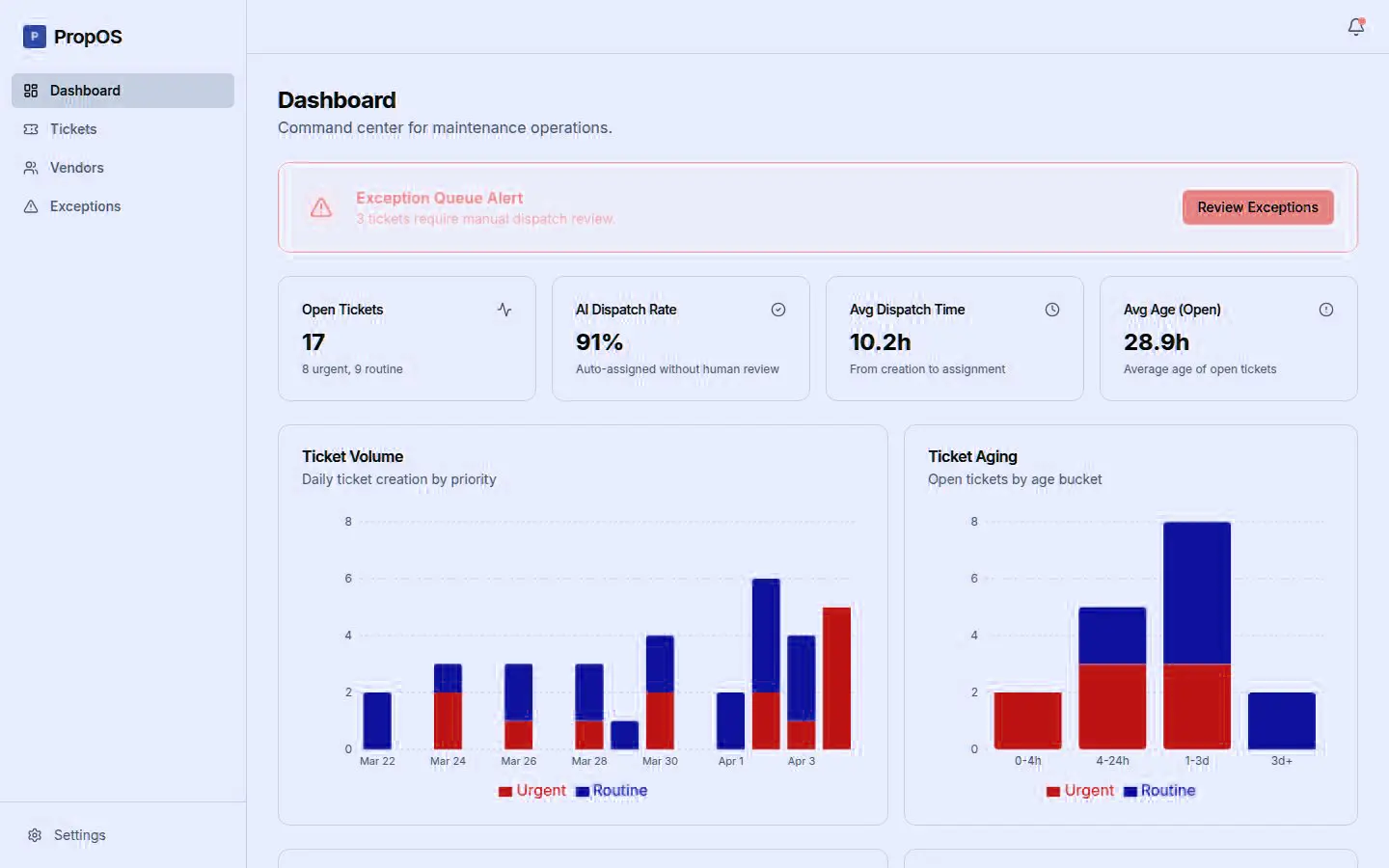
The operational dashboard showing queue status, aging tickets, and exceptions
Security & Controls
Because the system interacted with tenant data, internal operational records, and external vendor workflows, we built in clear controls from the start. That included:
Role-based access for internal users
Human review for edge cases and exceptions
Action guardrails around what could be sent or triggered automatically
Logging of request handling, status changes, and escalation activity
Secure integration patterns with the client’s property management and communication systems
Implementation
Phase
01
Discovery and workflow analysis
We mapped the maintenance lifecycle, interviewed teams, reviewed existing data quality, and prioritized the highest-friction points.
Phase
02
System design
We defined the orchestration flow, intake logic, escalation rules, vendor routing logic, and user interface requirements for internal staff.
Phase
03
Build and integration
We built the intake and orchestration layer, connected it to the client’s existing property operations tools, and implemented structured work order generation and update flows.
Phase
04
Rollout and training
We launched with a smaller subset of properties first, trained operations staff, tuned escalation thresholds, and refined communications based on early feedback.
Phase
05
Monitoring and optimization
After launch, we tracked response time, follow-up volume, exception rates, and routing accuracy to improve the workflow over time.
Results
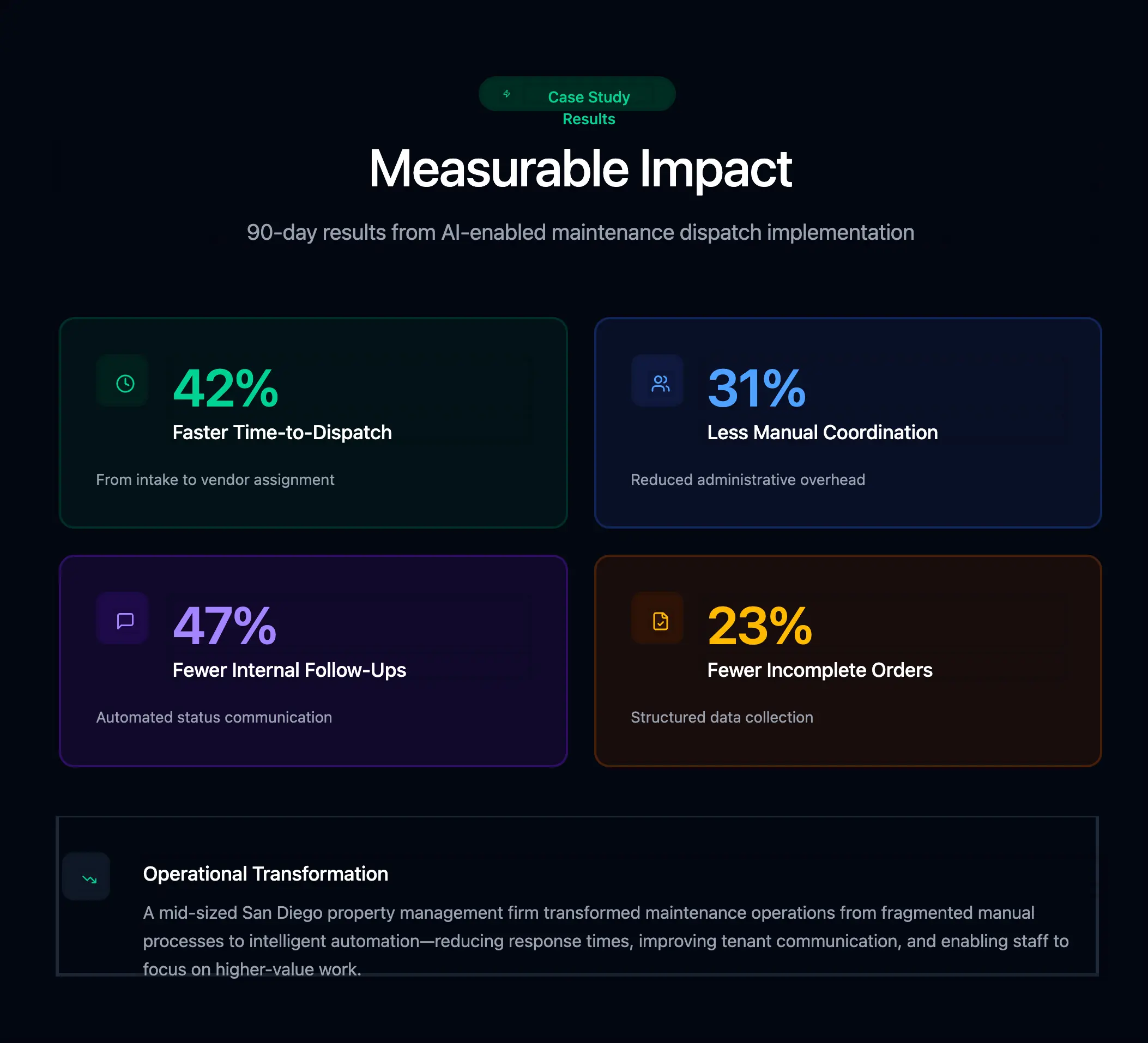
● improved tenant communication consistency across the portfolio
Just as importantly, the operations team reported spending less time triaging routine requests
and more time handling true exceptions and higher-value property issues.
Why It Worked
This project worked because the system was not treated as a chatbot or a generic automation layer. It was designed as an operational system around a very specific business problem: too much manual coordination in a high-volume, time-sensitive workflow.
Maintenance is one of the clearest real estate use cases for AI because it is frequent, repetitive, coordination-heavy, and full of predictable but time-sensitive decisions. That is exactly why it is such a strong fit for workflow automation and agentic orchestration.
Client Outcome
The client did not just get faster maintenance processing.
They got: